4N Norms Vacuum Packing Services in Mumbai
Europack - Mumbai, Maharashtra, India
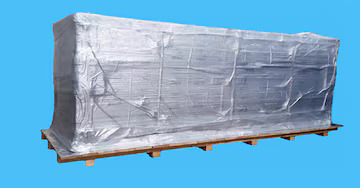
The 4N norms vacuum packing methodology represents the gold standard in industrial equipment preservation for export and long-term storage applications where absolute protection against environmental degradation is paramount. The 4N designation refers to four fundamental protection principles: No Moisture, No Oxygen, No Contamination, and No Corrosion. This comprehensive approach eliminates the environmental factors causing equipment deterioration during storage and transportation, maintaining machinery and components in factory-fresh condition regardless of external climate conditions or storage duration. Europack has pioneered 4N vacuum packing implementation in Mumbai's industrial export sector, serving precision machinery manufacturers, aerospace component suppliers, pharmaceutical equipment builders, and electronics fabricators whose products demand preservation standards exceeding conventional packaging capabilities.
Traditional packaging methods provide physical protection and some environmental isolation but cannot eliminate atmospheric exposure. Sealed wooden crates still contain residual air within the enclosure, carrying moisture that condenses during temperature fluctuations and oxygen that promotes oxidation and corrosion. VCI packaging slows corrosion but doesn't eliminate oxygen or prevent moisture-driven degradation of non-metallic materials. 4N vacuum packing transcends these limitations by physically removing atmosphere from packages, creating near-vacuum conditions where moisture content approaches zero, oxygen elimination prevents oxidation and biological activity, and the sealed environment excludes all external contaminants including dust, pollutants, and biological agents. This preservation quality approaches laboratory-grade storage conditions, achievable in field packaging operations through proper technique and equipment.
No Moisture: Water vapor elimination constitutes the first fundamental requirement. Moisture promotes corrosion on ferrous metals, tarnishing on copper and brass, oxidation on aluminum surfaces, degradation of rubber and plastic components, biological growth including mold and bacteria, and general material deterioration. 4N vacuum packing removes moisture through multi-stage desiccation. Equipment first undergoes thorough cleaning and drying, removing water from surfaces and internal passages. Components then enter climate-controlled preparation areas maintaining low humidity environments preventing moisture re-absorption. Vacuum chamber evacuation extracts air carrying residual moisture from packaging, followed by nitrogen purging replacing evacuated air with dry nitrogen containing virtually zero moisture. Desiccant packets strategically placed within packaging absorb any trace moisture remaining or potentially released from porous materials during storage. The result is packaging internal environment with relative humidity below 5%, preventing all moisture-related degradation mechanisms.
No Oxygen: Oxygen elimination addresses oxidation-driven degradation affecting metals, lubricants, rubber components, and various organic materials. Ferrous metals exposed to oxygen develop iron oxide (rust) that expands, flakes, and progressively degrades metal surfaces. Aluminum develops aluminum oxide though this forms protective surface layers in most cases. Lubricating oils oxidize forming acids and sludges that degrade lubrication properties and accelerate component wear. Rubber compounds oxidize becoming brittle and losing elasticity. Organic materials including fabrics, leather, and paper deteriorate through oxidation reactions. Vacuum evacuation removes 99%+ of atmospheric oxygen from packages, with residual oxygen scavenging accomplished through nitrogen flushing and oxygen-absorbing packets chemically binding remaining trace oxygen. Testing confirms packaged equipment internal atmospheres contain <0.5% oxygen concentration—insufficient to support oxidation reactions at practical rates over years of storage.
No Contamination: Contaminant exclusion protects equipment from dust, industrial pollutants, biological agents, and chemical contaminants that could compromise functionality or appearance. Dust accumulation on precision surfaces requires cleaning before equipment commissioning, delaying installations and potentially damaging components during cleaning operations. Industrial pollutants including sulfur compounds, chlorides, and acid aerosols accelerate corrosion and degrade materials. Biological contamination ranges from mold growth on organic surfaces to insect infestation of wooden packing materials potentially transferring to equipment. Chemical contaminants from nearby stored materials or atmospheric pollution deposit on equipment surfaces causing staining or corrosion. The sealed barrier of vacuum packaging combined with initial equipment cleanliness creates pristine internal environments maintained throughout storage duration. Equipment emerges from properly executed 4N packaging in identical condition to entry, without the cleaning, degreasing, and refurbishment often required after conventional storage.
No Corrosion: Corrosion prevention synthesizes the previous three principles while adding active corrosion inhibition. With moisture, oxygen, and contaminants eliminated, electrochemical corrosion reactions cannot proceed. However, supplementary protection through Volatile Corrosion Inhibitor (VCI) impregnated packaging materials provides additional security margin. VCI compounds vaporize within sealed packages, depositing molecular protective layers on all exposed metal surfaces. This vapor-phase protection reaches complex geometries, internal passages, and inaccessible areas that physical coatings or greases cannot cover. VCI protection acts as insurance against any residual moisture or oxygen escaping desiccant and oxygen scavenger control, maintaining corrosion-free conditions even if primary barriers experience partial degradation over extended storage durations. The combination of environmental control plus active corrosion inhibition delivers preservation security unattainable through either approach alone.
4N vacuum packing execution requires specialized equipment and rigorous process control distinguishing this technology from simple vacuum bagging:
| Process Step | Equipment Required | Critical Parameters | Verification Method |
|---|---|---|---|
| Equipment Preparation | Clean room, drying oven | Surface cleanliness, moisture <10% | Visual inspection, moisture meter |
| Vacuum Chamber Loading | Industrial vacuum chamber | Chamber seal integrity | Leak testing, pressure hold test |
| Evacuation | Vacuum pump system | Pressure <1 mbar, time >30 min | Vacuum gauge monitoring |
| Nitrogen Flushing | Nitrogen generator/cylinders | N2 purity >99.9%, 3+ purge cycles | Oxygen analyzer readings |
| Sealing | Heat sealer, chamber with inert gas | Seal width >10mm, strength >30N/15mm | Peel testing, dye penetrant |
| Quality Verification | Oxygen analyzer, moisture indicator | O2 <0.5%, RH <5% | Gas sampling, indicator cards |
Precision machinery including CNC machine tools, coordinate measuring machines, and optical equipment benefits immensely from 4N preservation. These machines contain precision-ground ways, ball screws, linear guides, and optical components whose functionality depends on surface finish and dimensional accuracy measurable in microns. Any corrosion pitting, even microscopic, degrades precision and machine performance. Optical surfaces fog from moisture exposure or develop stains from atmospheric contaminants. 4N vacuum packing preserves these precision components in as-manufactured condition, eliminating the extensive cleaning, calibration, and potential re-machining required when precision equipment experiences conventional storage degradation.
Aerospace components face stringent quality requirements with zero tolerance for corrosion or contamination. Landing gear assemblies, actuators, hydraulic components, and structural elements undergo vacuum packing after manufacture, maintaining aerospace quality standards through supply chain logistics and storage periods potentially extending months or years between manufacture and aircraft installation. The traceability and documentation requirements of aerospace applications receive full support through Europack's quality management systems, providing material certifications, process records, and test reports required for aerospace quality compliance.
Pharmaceutical equipment and medical devices require preservation methods preventing biological contamination while maintaining sterile or clean conditions. Surgical instrument sets, laboratory analyzers, medical imaging components, and pharmaceutical processing equipment utilize 4N vacuum packing maintaining clean-room manufacturing conditions through distribution and storage. The validated processes and documentation Europack provides support pharmaceutical quality systems and regulatory compliance requirements for medical device storage and distribution.
Properly executed 4N vacuum packing enables multi-year equipment storage without condition degradation. Equipment destined for project installations with extended timelines, spare parts inventories maintained for eventual use, or strategic reserves held for potential future requirements all benefit from preservation extending years or decades. The protection duration depends primarily on barrier material integrity and desiccant/oxygen scavenger capacity. Premium laminate barriers maintain seal integrity and vapor barrier properties for 5-10 years under proper storage conditions. Desiccants and oxygen scavengers have finite absorption capacity but proper sizing based on package volume and expected storage duration ensures protection throughout planned storage periods.
Storage environment influences preservation success. While 4N packaging provides internal protection regardless of external conditions, storage in climate-controlled warehouses prevents barrier material degradation from temperature extremes and UV exposure extending package service life. Indoor storage prevents physical damage from weather, wildlife, and vegetation growth. Proper racking systems prevent package crushing or deformation that could compromise seals. Periodic inspection programs verify package integrity, identifying any seal failures or physical damage requiring corrective action before internal protection fails.
Quality verification occurs at multiple stages throughout the 4N packing process. Pre-packing equipment inspection documents baseline condition through photography and inspection reports. During packing, continuous monitoring tracks vacuum levels, nitrogen purity, and sealing parameters confirming process execution within specifications. Post-packing verification includes leak testing using helium leak detectors identifying any seal defects, oxygen concentration measurement confirming internal atmosphere composition meets specifications, and moisture indicator card placement visible through transparent packaging allowing external verification of internal humidity status without package opening.
For critical applications or when establishing new procedures, comprehensive validation testing demonstrates process effectiveness. Test packages containing standard steel coupons, moisture-sensitive materials, and data loggers undergo accelerated aging simulating extended storage conditions. Subsequent package opening and analysis confirms corrosion-free coupon condition, stable moisture levels throughout test duration, and internal atmosphere composition maintenance. This validation data supports customer quality systems, insurance requirements, and regulatory compliance documentation needs.
Europack's 4N vacuum packing capability combines specialized equipment, trained personnel, and rigorous quality control rarely found outside dedicated packaging facilities. Our vacuum chambers accommodate equipment from small components to assemblies measuring 3 meters, covering most industrial machinery and component packaging requirements without size limitations forcing alternative approaches. The vacuum pump capacity achieves ultimate vacuum levels below 0.1 mbar—deep vacuum extraction ensuring thorough air and moisture removal impossible with less sophisticated equipment. Our nitrogen generation systems provide continuous high-purity nitrogen eliminating the scheduling constraints and cost associated with cylinder nitrogen sources.
Process expertise extends beyond equipment operation to comprehensive packaging engineering. We specify appropriate barrier materials for specific applications, calculate desiccant and oxygen scavenger requirements based on equipment characteristics and storage duration, design packaging configurations accommodating equipment geometry while minimizing internal void volume, and establish quality control procedures ensuring consistent results. This engineering support eliminates trial-and-error experimentation by customers attempting self-implementation, accelerating implementation and preventing the costly failures that occur when preservation packaging doesn't perform as expected after months or years of storage.
How does 4N vacuum packing cost compare to conventional packaging? 4N vacuum packing involves higher upfront cost than conventional crating or shrink wrapping due to specialized materials, equipment usage, and labor-intensive process execution. A typical 4N package costs 3-5× more than standard wooden crate packaging for equivalent-sized equipment. However, this cost comparison ignores the value protection 4N provides. For precision machinery where corrosion damage requires expensive refurbishment or replacement of corroded components, the insurance value of reliable preservation far exceeds incremental packaging cost. For equipment experiencing long storage durations or extreme shipping conditions, 4N prevention of degradation eliminates costs of post-storage cleaning, lubrication, testing, and potential repairs. When evaluated on total ownership cost including preservation effectiveness and damage prevention, 4N often proves more economical than cheaper alternatives.
Can packaged equipment be inspected without destroying packaging? Traditional vacuum packaging requires complete package opening for equipment inspection, destroying preservation and necessitating re-packing for continued protection. Europack's advanced 4N packaging incorporates inspection access panels using resealable zipper closures or heat-seal films allowing limited package opening for visual equipment inspection without compromising overall barrier integrity. The inspection panel size accommodates optical instruments, measurement tools, and photographic documentation while preventing general atmospheric exchange. After inspection completion, the access panel reseals maintaining internal environment. Multiple inspections are possible though each opening introduces minor amounts of atmosphere requiring desiccant replacement or supplementary oxygen scavenger installation. For applications requiring frequent inspection access, we recommend transparent barrier materials enabling visual monitoring without package opening.
What happens if vacuum packaging fails during storage? Package failure typically manifests as loss of vacuum tension indicating seal leakage or barrier puncture. Early detection through periodic inspection allows corrective intervention before equipment damage occurs. Upon failure discovery, affected equipment should be evaluated for corrosion or contamination, re-cleaned if necessary, and re-packaged in new barriers. The root cause analysis identifies whether failure resulted from seal defects, physical damage during handling, barrier material degradation, or insufficient desiccant capacity. Corrective actions prevent recurrence in remaining inventory or future packaging operations. For critical equipment or applications where failure detection might be delayed, Europack recommends redundant packaging using secondary barriers providing backup protection should primary barriers fail. While increasing packaging cost, this defense-in-depth approach provides security critical for irreplaceable equipment or applications where equipment unavailability causes major operational or financial consequences.